OFFICIAL SITE FOUND FOR: Lorser+Feitelson
Gallery: ARTIST
Country: U.S.A.
City: NEW YORK NY
Website:
https://www.lorserfeitelson.com/
Abstract:
Lorser Feitelson came to Los Angeles in 1927, bringing with him Modernist ideas he had adopted while living in New York and Paris. Highly influential as a leader and teacher in the art community, (Feitelson taught at the highly influential Chouinard Art Institute and ArtCenter College of Design in Pasadena) Feitelson helped to establish Los Angeles as the important art center it is today.
Throughout his lifetime, Feitelson was influenced by a myriad of artistic movements. After attending the 1913 Armory Show, Feitelson found himself immersed in the growing community of New York modern artists. In the 1920s Feitelson relocated to Paris, in the hopes of finding an audience that would be more receptive to modern art. During these early decades of his artistic practice, Feitelson extrapolated from the works of the Futurists and Cubists, as well as Matisse, Cézanne, and Duchamp. His paintings were delineated by his inspirations, leading to categories in his work such as “Neo- Classicism” and “Kinetic Drawings.”
Feitelson’s oeuvre has been featured in the Orange County Museum of Art’s "Birth of the Cool: California Art, Design and Culture at Midcentury" (2007), as well as the J. Paul Getty Museum’s “Pacific Standard Time” (2011-2012). Works by Feitelson are included in the permanent collections of the Los Angeles County Museum of Art, the National Museum of American Art, the Smithsonian Institution, the San Francisco Museum of Modern Art, the Whitney Museum of American Art.
Gallery: FOUNDATION
Country: U.S.A.
City: CALIFORNIA CA
Website:
https://www.thefeitelsonlundebergartfoundation.org/
Email: feitelsonlundebergartfoundation@hotmail.com
Abstract:
From roughly 1940 to 1960, Feitelson embarked upon a remarkable exploration of abstract forms. Rooted in the figurative world, Feitelson’s compositions evolved from the organic into the geometric. Known as Abstract Classicism, or Hard Edge, this period of Feitelson’s work offers unique imagery that maintains the profound sense of space and form associated with traditional Classicism. He was one of the four artists featured in the landmark 1959 Abstract Classicists exhibition curated by Jules Langsner at the Los Angeles County Museum in Exposition Park.
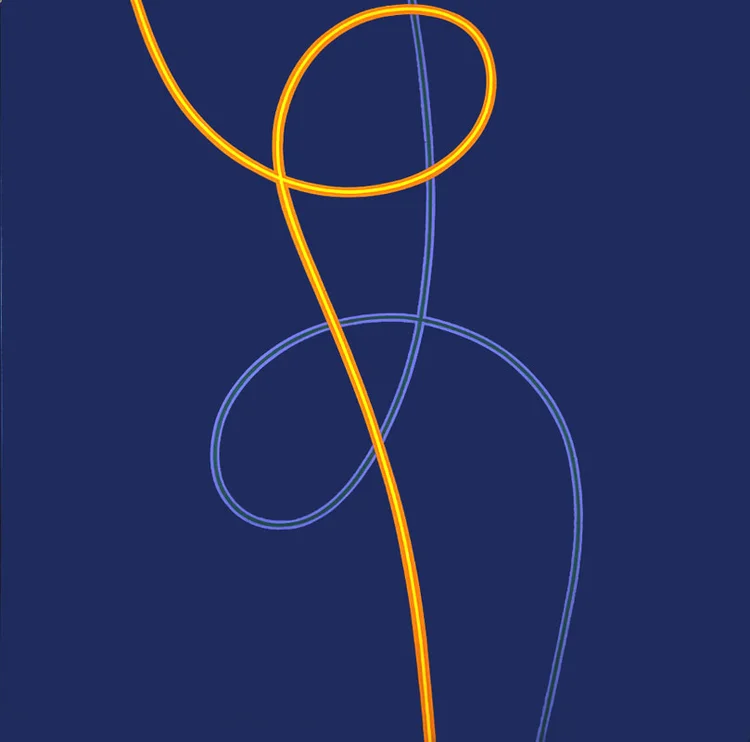
As time went on, Feitelson began reducing his compositions, focusing on the essentials. From the mid-1960s, he ventured into Minimalism, creating sleek paintings comprised of sensuous lines set against solid backgrounds of color. These works were a culmination of Feitelson’s experience and represent decades of artistic development.
|