








"Galleries Sector, Booth P19"
Frank Bowling, Melvin Edwards, Sam Gilliam, Harmony Hammond, Lorraine O’Grady, Betty Parsons, Joan Semmel, Jack Whitten

Art Basel 2018
Messe Basel Messeplatz 10 4005 Basel Switzerland
+41 79 739 35 38 e-mail:

Alexander Gray Associates
510 West 26 Street, New York NY 10001 United States

+1 212 399 2636 e-mail:
June 14 > 17, 2018
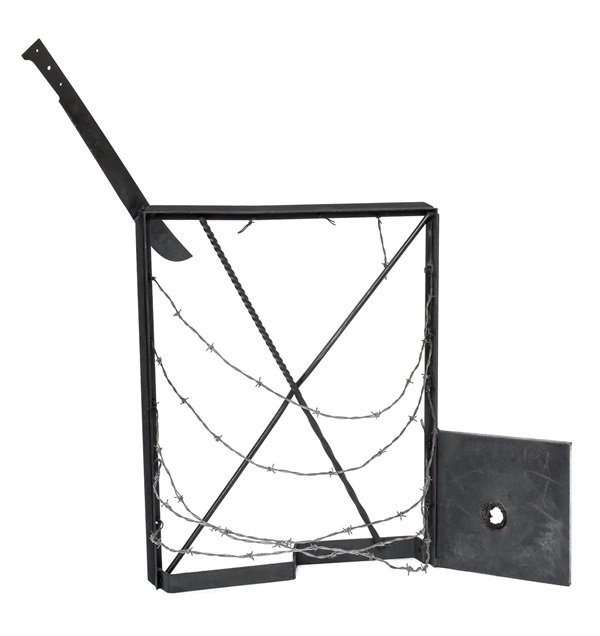 Melvin Edwards, Ventana a Isla Negra, 1973, welded steel and barbed wire, 44.4h x 48w x 20d in (112.78h x 121.92w x 50.8d cm) |
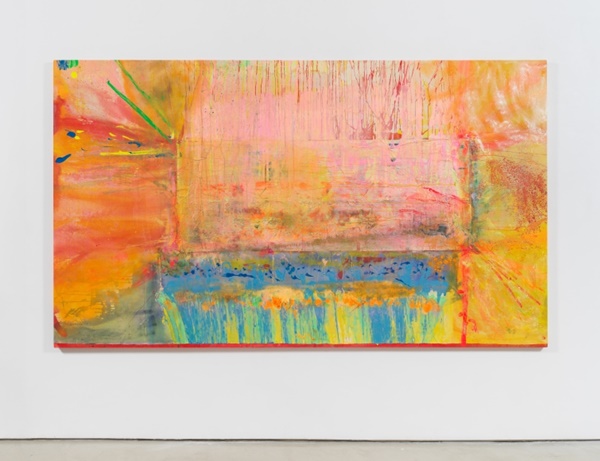 Frank Bowling Mappa Mundi, 2015 Acrylic and mixed media on collaged canvas 69h x 119w in (175.26h x 302.26w cm) |
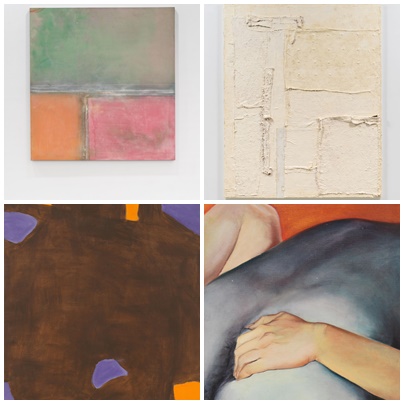 |
Alexander Gray Associates presents recent and historic works by Frank Bowling, Melvin Edwards, Sam Gilliam, Harmony Hammond, Lorraine O’Grady, Betty Parsons, Joan Semmel, and Jack Whitten. Pioneering figures in their chosen mediums, these eight artists challenge conceptual and formal conventions in their work while examining the impact of social and political issues on individual lives and collective experience—diaspora and colonialism, gender and feminism, representation and identity. The Gallery has presented exhibitions and championed artists exploring the complex and intersectional matters of our time since its opening in 2006.
Frank Bowling, Melvin Edwards, Sam Gilliam, and Jack Whitten frequently exhibited together, including in the groundbreaking 1969 show 5+1, curated by Bowling, at the State University of New York at Stony Brook. Committed to expanding notions of abstraction, they insisted that a “black sensibility” informed their work. Often integrating political and personal concerns into their practices, they questioned the limits of painting and sculpture through formal and material improvisation. Their achievements are currently highlighted in the Tate Modern’s traveling exhibition Soul of a Nation: Art in the Age of Black Power, which celebrates the contributions of Black artists to contemporary art in America.
On view in the presentation, in Yonder I (1973), Bowling plays with the conventions of Color Field painting, crafting a rectilinear composition from collaged planes of hazy color. Meanwhile, Gilliam’s beveled edge paintings from the late 1960s and early 1970s advance painting techniques through their radical construction. Fundamentally questioning properties of color, light, depth, and form, the canvases project off the wall, propelling themselves into the viewer’s space. Also experimenting with process and material transformation, specifically with the medium of acrylic, in Yellow, Black, and Red (1980), Whitten juxtaposes a target—a reference to his Air Force ROTC training at Tuskegee Institute and topographical mapping—against scraped black paint, synthesizing political history and personal narrative. In Edwards’ politically charged sculptures, steel objects are welded into complex reliefs and tableaux, building a language of images and materials offering multiple perspectives and interpretations. In Ventana a Isla Negra (1973), he assembles a sculptural homage to the poet Pablo Neruda and responds to the 1971 Attica Prison riot; the work conjoins disparate materials and connotations, including barbed wire, a bullet hole riddled plaque, and a machete—an agricultural tool, as well as a symbol of violence and revolution.
Like Bowling, Edwards, Gilliam, and Whitten, who utilized abstraction as a means of critically reflecting on the nature of Black subjectivity, Lorraine O’Grady’s practice re-articulates the connection between art and identity. In her groundbreaking performance Rivers, First Draft (1982), produced with the support of the legendary New York gallery Just Above Midtown (JAM), O’Grady constructs a feminist account of her experience as a Black woman coming of age in the art world. The work outlines the conditions that led her to create her persona of Mlle Bourgeoise Noire (1980—1983) and anticipates the influential performance Art Is … (1983), featured prominently in Soul of a Nation. Similarly, Harmony Hammond and Joan Semmel draw on their defining contributions to Second-wave feminism in New York in the 1970s. Approaching abstraction from a material-driven perspective, Hammond mines craft traditions—“women’s work”—and Modernism to create abstract canvases that, in her words,“perform queerly” due to their utilization of “near monochrome” color. Paintings like Chenille #1 (2016—2017) embed gendered content and physical presence into their formal and material experimentation—implying visual muscle memory. Through figuration, Semmel’s work from the 1970s explores sexuality from a woman’s perspective in order to develop a feminist approach to representation and autonomy. In Blue Back (1973), she portrays the woman as the active lover whose vibrant passion outstrips that of her partner.
Betty Parsons remains best known as the founder and driving force behind her eponymous New York gallery, established in 1948, where she played a pivotal role in advancing post-war art, particularly New York School Abstract Expressionism. As the Gallery developed, she evolved as a champion of female artists and artists of color, providing a prominent platform for their work. Less known is that throughout her life she painted and exhibited her own work, refining a practice of abstract painting that set out to capture the “invisible presence” of life. Parsons’ canvases combine the flat formalism of Color Field painting with allusions to nature, time, and the ephemeral. In compositions like Fall (1964), she crafts lyrical images from thin layers of pigment that forward an impression of gestural immediacy.
Cumulatively, these eight artists chart a changing social and political landscape in the late twentieth-century United States. Responding to racial oppression, gender inequality, and sexual discrimination, they critically reflect on contemporary society. As Hammond states, “I see art-making, especially that which comes from the margins of the mainstream, as a site of resistance, a way of interrupting and intervening in those historical and cultural fields that continually exclude me, a … gathering of forces on the borders.”
Frank Bowling, Melvin Edwards, Sam Gilliam, and Jack Whitten frequently exhibited together, including in the groundbreaking 1969 show 5+1, curated by Bowling, at the State University of New York at Stony Brook. Committed to expanding notions of abstraction, they insisted that a “black sensibility” informed their work. Often integrating political and personal concerns into their practices, they questioned the limits of painting and sculpture through formal and material improvisation. Their achievements are currently highlighted in the Tate Modern’s traveling exhibition Soul of a Nation: Art in the Age of Black Power, which celebrates the contributions of Black artists to contemporary art in America.
On view in the presentation, in Yonder I (1973), Bowling plays with the conventions of Color Field painting, crafting a rectilinear composition from collaged planes of hazy color. Meanwhile, Gilliam’s beveled edge paintings from the late 1960s and early 1970s advance painting techniques through their radical construction. Fundamentally questioning properties of color, light, depth, and form, the canvases project off the wall, propelling themselves into the viewer’s space. Also experimenting with process and material transformation, specifically with the medium of acrylic, in Yellow, Black, and Red (1980), Whitten juxtaposes a target—a reference to his Air Force ROTC training at Tuskegee Institute and topographical mapping—against scraped black paint, synthesizing political history and personal narrative. In Edwards’ politically charged sculptures, steel objects are welded into complex reliefs and tableaux, building a language of images and materials offering multiple perspectives and interpretations. In Ventana a Isla Negra (1973), he assembles a sculptural homage to the poet Pablo Neruda and responds to the 1971 Attica Prison riot; the work conjoins disparate materials and connotations, including barbed wire, a bullet hole riddled plaque, and a machete—an agricultural tool, as well as a symbol of violence and revolution.
Like Bowling, Edwards, Gilliam, and Whitten, who utilized abstraction as a means of critically reflecting on the nature of Black subjectivity, Lorraine O’Grady’s practice re-articulates the connection between art and identity. In her groundbreaking performance Rivers, First Draft (1982), produced with the support of the legendary New York gallery Just Above Midtown (JAM), O’Grady constructs a feminist account of her experience as a Black woman coming of age in the art world. The work outlines the conditions that led her to create her persona of Mlle Bourgeoise Noire (1980—1983) and anticipates the influential performance Art Is … (1983), featured prominently in Soul of a Nation. Similarly, Harmony Hammond and Joan Semmel draw on their defining contributions to Second-wave feminism in New York in the 1970s. Approaching abstraction from a material-driven perspective, Hammond mines craft traditions—“women’s work”—and Modernism to create abstract canvases that, in her words,“perform queerly” due to their utilization of “near monochrome” color. Paintings like Chenille #1 (2016—2017) embed gendered content and physical presence into their formal and material experimentation—implying visual muscle memory. Through figuration, Semmel’s work from the 1970s explores sexuality from a woman’s perspective in order to develop a feminist approach to representation and autonomy. In Blue Back (1973), she portrays the woman as the active lover whose vibrant passion outstrips that of her partner.
Betty Parsons remains best known as the founder and driving force behind her eponymous New York gallery, established in 1948, where she played a pivotal role in advancing post-war art, particularly New York School Abstract Expressionism. As the Gallery developed, she evolved as a champion of female artists and artists of color, providing a prominent platform for their work. Less known is that throughout her life she painted and exhibited her own work, refining a practice of abstract painting that set out to capture the “invisible presence” of life. Parsons’ canvases combine the flat formalism of Color Field painting with allusions to nature, time, and the ephemeral. In compositions like Fall (1964), she crafts lyrical images from thin layers of pigment that forward an impression of gestural immediacy.
Cumulatively, these eight artists chart a changing social and political landscape in the late twentieth-century United States. Responding to racial oppression, gender inequality, and sexual discrimination, they critically reflect on contemporary society. As Hammond states, “I see art-making, especially that which comes from the margins of the mainstream, as a site of resistance, a way of interrupting and intervening in those historical and cultural fields that continually exclude me, a … gathering of forces on the borders.”
 Harmony Hammond |
Frank Bowling |
|
Melvin Edwards |
Sam Gilliam |
|
Joan Semmel |
Jack Whitten |
Tuesday, June 12, 2018, 11am to 8pm
Wednesday, June 13, 2018, 11am to 8pm
mpefm
SWITZERLAND fair art press release
Vernissage (by invitation only):
Wednesday, June 13, 2018, 4pm to 8pm
Wednesday, June 13, 2018, 4pm to 8pm
Public days:
Thursday, June 14, 2018, 11am to 7pm
Friday, June 15, 2018, 11am to 7pm
Saturday, June 16, 2018, 11am to 7pm
Sunday, June 17, 2018, 11am to 7pm
Ticket Options*
Day ticket: CHF 60 on-site, CHF 50 online
Evening ticket, after 5pm: CHF 28
Two-day ticket: CHF 100 on-site, CHF 90 online
Permanent ticket: CHF 140 on-site, CHF 130 online
Reduced day ticket for Students/Seniors: CHF 45 on-site, CHF 40 online
Combination ticket for Art Basel and Design Miami: CHF 85 on-site, CHF 75 online
Permanent Combination ticket for Art Basel and Design Miami/Basel: CHF 210 on-site, CHF 190 online
Group tickets
Groups of 10 people or more: CHF 40 per person
Accompanied school groups: CHF 30 per person
'Vernissage +' Card admits one person to the Vernissage on Wednesday, June 13, from 4pm (access to the Unlimited sector in Hall 1 from 11am): CHF 150
*Admission is free for children up to 12, when accompanied by a parent. Tickets entitle the holder to reduced-price admission at several Basel art museums during the show.


Thursday, June 14, 2018, 11am to 7pm
Friday, June 15, 2018, 11am to 7pm
Saturday, June 16, 2018, 11am to 7pm
Sunday, June 17, 2018, 11am to 7pm
Ticket Options*
Day ticket: CHF 60 on-site, CHF 50 online
Evening ticket, after 5pm: CHF 28
Two-day ticket: CHF 100 on-site, CHF 90 online
Permanent ticket: CHF 140 on-site, CHF 130 online
Reduced day ticket for Students/Seniors: CHF 45 on-site, CHF 40 online
Combination ticket for Art Basel and Design Miami: CHF 85 on-site, CHF 75 online
Permanent Combination ticket for Art Basel and Design Miami/Basel: CHF 210 on-site, CHF 190 online
Group tickets
Groups of 10 people or more: CHF 40 per person
Accompanied school groups: CHF 30 per person
'Vernissage +' Card admits one person to the Vernissage on Wednesday, June 13, from 4pm (access to the Unlimited sector in Hall 1 from 11am): CHF 150
*Admission is free for children up to 12, when accompanied by a parent. Tickets entitle the holder to reduced-price admission at several Basel art museums during the show.
QR of this press release
in your phone, tablet


