


🎨 FAIR
PACE GALLERY - FAIR FRIEZE ABU DHABI 2026 BOOTH: D08 November 19 > 22, 2026

PACE GALLERY
Tel: Tel +852 2608 5065 Fax +852 2608 5064 | Email:
Booth: D08 | Fair: FRIEZE ABU DHABI 2026


📍 Location(s)
Locations: NEW YORK NY, PALM BEACH FL, LONDON, BEIJING, HONG KONG, MENLO PARK CA
- PACE GALLERY - NEW YORK NY - 32 East 57th Street New York, NY, 10022 - U.S.A.
- PACE GALLERY - PALM BEACH FL - The Royal Poinciana Plaza 340 Royal Poinciana Way Suite M333 Palm Beach, FL - U.S.A.
- PACE GALLERY - NEW YORK NY - 508 West 25th Street New York, NY, 10001 - U.S.A.
- PACE GALLERY - LONDON - 5 Hanover Square London W1S 1HQ - UNITED KINGDOM
- PACE GALLERY - BEIJING - 798 Art District, No. 2 Jiuxianqiao Road, Chaoyang District Beijing, 100015, CN - CHINA
- PACE GALLERY - HONG KONG - 12/F, H Queen's 80 Queen's Road Central Hong Kong - HONG KONG
- PACE GALLERY - MENLO PARK CA - 300 El Camino Real Menlo Park, CA, 94025 - U.S.A.
- PACE GALLERY - NEW YORK NY - 510 West 25th Street New York, NY, 10001 - U.S.A.
- PACE GALLERY - NEW YORK NY - 540 West 25th Street,NEW YORK NY 10001 - U.S.A.

🎨 Artists
Artist(s): Emily Kam Kngwarray
Emily Kam Kngwarray is one of Australia’s most critically acclaimed and celebrated contemporary artists.
A member of the Anmatyerr people of Alhalker, originating in Australia’s Northern Territory, her artistic practice is rooted in Indigenous Australian beliefs and a cultural responsibility to ancestral lands; this all-encompassing philosophy draws on the history, relationships, topography, and vegetation of the surrounding earth. Working in the remote central desert region then known as Utopia, her oeuvre was deeply inspired by her heritage, Anmatyerr spirituality, and surrounding landscapes. Kngwarray drew much of her creativity from The Dreaming—a cultural worldview and comprehensive framework that structures and narrates relationships among individuals, families, ancestral history, future descendants, and the land and spirits. Her artistic journey was shaped by her role in ceremonial traditions, expressed through dance, chant, and the painting of bodies with natural materials such as ground ochre, charcoal, and ash. As an Elder of the Anmatyerr people and a custodian of sacred land, she developed a complex and potent visual language, which translated across her vibrant batiks and later paintings on canvas that brought her international acclaim.
In the 1970s, Kngwarray began painting on silk and cotton fabric in the batik style alongside the women in her community, and in 1977, became a founding member of the Utopia Women’s Batik Group. This labor-intensive process involved the unforgiving medium of hot wax, which, once applied, cannot be manipulated. Introduced to canvas in 1988, Kngwarray’s practice shifted in part due to the adaptability of paint as a medium, which allowed her to create spontaneous, gestural marks using various implements. Kngwarray’s paintings are a continuation of the deep-rooted oral and visual traditions that inspired her batik work. Beginning in 1988–1989, when she was already in her seventies, she acquired her first canvas and created her first painting, Emu Woman (1988–1989), which debuted in the group exhibition, A Summer Project: Utopia Women's Paintings held at S.H. Ervin Gallery, Sydney (1989).
Kngwarray's paintings, characterized by layered brushstrokes and dabs of paint, embody the vibrancy and rhythm of the natural world, reflecting her acute sense of its dynamic and pulsating nature. Centered on imagery from her homeland, the artist often portrayed root systems and life cycles of plants. Her skin name, Kam, meaning the seeds and seedpod of the anwerlarr, or pencil yam, in her first language of Anmatyerr, is a central motif within her oeuvre, and often appears in works, especially from 1990–1991. In the following years she shifted to what has been referred to as her “high colorist phase,” characterized by a wider range of color and saturated dabs of paint that reveal visual patterns and configurations when viewed at a distance. An indomitable force, she continued to create art until the end of her life.
Kngwarray was a prolific artist, executing an estimated three thousand paintings in an eight-year span. In 1997, she was represented posthumously at the 47th Venice Biennale. Her work is held in public collections worldwide including Araluen Arts Centre, Alice Springs, Australia; Lowe Art Museum, University of Miami, Coral Gables, Florida; Museum of Contemporary Art Australia, Sydney; National Gallery of Victoria, Melbourne; and The Vatican Museums, Vatican City, among many others. In 2025, a solo exhibition dedicated to Kngwarray’s work will be presented at Pace’s London gallery with the support of D’Lan Contemporary, which will be followed by a major exhibition at Tate Modern, London, opening in July.
📅 Dates:
November 19 - 22, 2026
🖼️ Images:
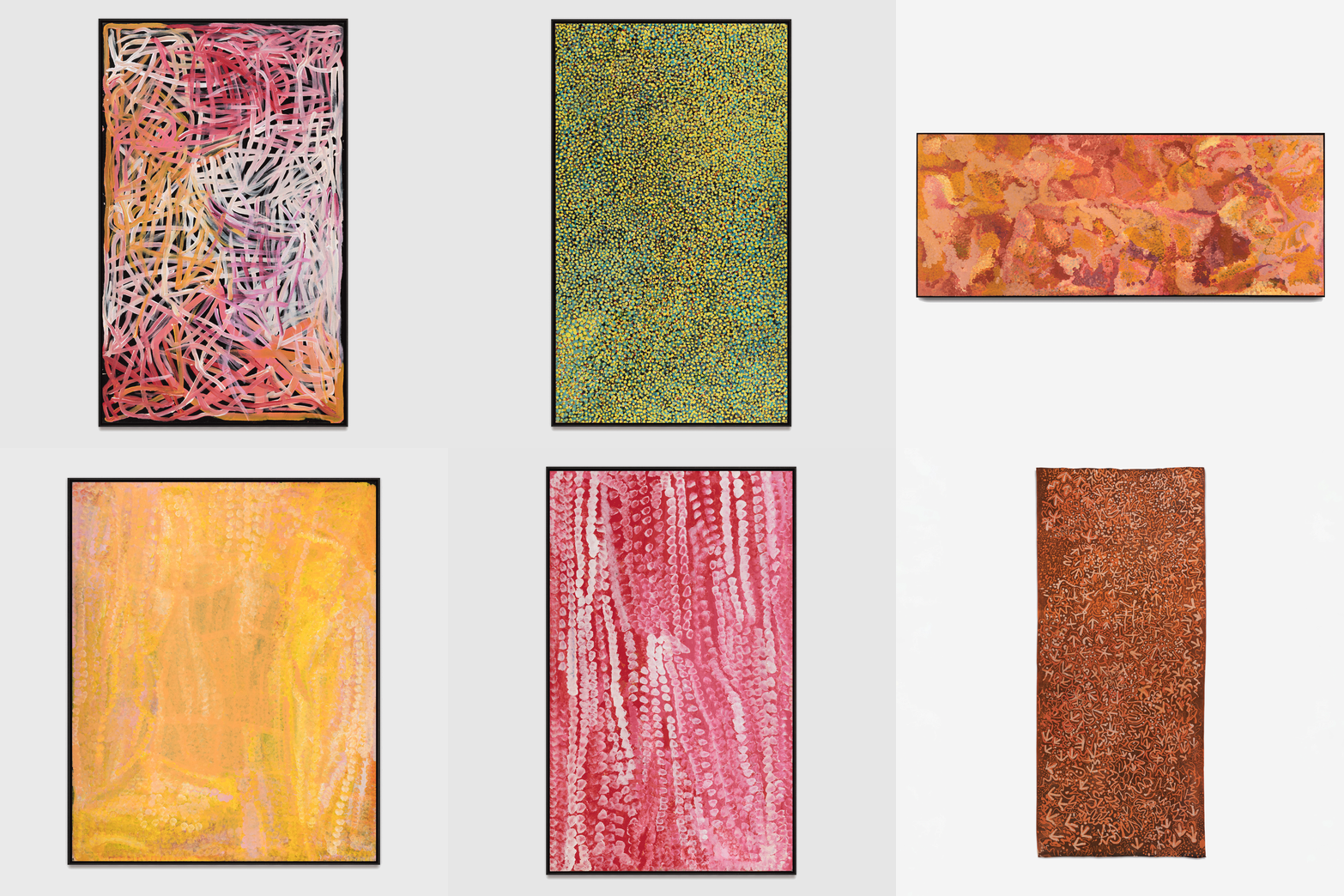
Emily Kam Kngwarray, Desert Tracks, 1992 © Emily Kam Kngwarray / Artists Rights Society (ARS), New York Emily Kam Kngwarray, Merne Everything, 1991 © Emily Kam Kngwarray / Artists Rights Society (ARS), New York Emily Kam Kngwarray, Anatye - Bush Potato, 1995 © Emily Kam Kngwarray / Artists Rights Society (ARS), New York Emily Kam Kngwarray, Untitled, 1996 © Emily Kam Kngwarray / Artists Rights Society (ARS), New York Emily Kam Kngwarray, Life Cycle, 1995 © Emily Kam Kngwarray / Artists Rights Society (ARS), New York Emily Kam Kngwarray, Desert Tracks, 1992 © Emily Kam Kngwarray / Artists Rights Society (ARS), New York Emily Kam Kngwarray, Anooralya, 1996 © Emily Kam Kngwarray / Artists Rights Society (ARS), New York Emily Kam Kngwarray, Anooralya Yam Story, 1994 © Emily Kam Kngwarray / Artists Rights Society (ARS), New York Emily Kam Kngwarray, Awely, 1989 © Emily Kam Kngwarray / Artists Rights Society (ARS), New York Emily Kam Kngwarray, Untitled, 1981 © Emily Kam Kngwarray / Artists Rights Society (ARS), New York Emily Kam Kngwarray, Alalgura Awelye VI, 1994 © Emily Kam Kngwarray / Artists Rights Society (ARS), New York
📝 Exhibition Description:
Pace will present a solo booth of paintings by Emily Kam Kngwarray, one of Australia’s most celebrated artists, at the inaugural Frieze Abu Dhabi. The presentation will include a selection of never-before-exhibited paintings alongside works that featured in the gallery’s recent exhibition Emily Kam Kngwarray: The Turning Season held in New York.
The works on view span the artist’s entire career, from her early batik textiles and paintings through to her later colorist canvases and abstractions inspired by the anwerlarr yam.
A member of the Anmatyerr people of Alhalker in Australia’s Northern Territory, Kngwarray grounded her practice in Indigenous Australian knowledge systems and a profound custodial connection to ancestral lands. Her expansive worldview encompassed the histories, relationships, topography, and plant life of the surrounding environment. Working in the remote Central Desert community then known as Utopia, she drew deeply on Anmatyerr spirituality, cultural traditions, and the landscape that shaped her life. Kngwarray’s paintings, characterized by layered brushstrokes and dabs of paint, embody the vibrancy and rhythm of the natural world, reflecting her acute sense of its dynamic and pulsating nature. Centered on imagery from her homeland, the artist often portrayed root systems and life cycles of plants.
Kngwarray drew much of her creativity from The Dreaming—a cultural worldview and comprehensive framework that structures and narrates relationships among individuals, families, ancestral history, future descendants, and the land and spirits. Her artistic journey was shaped by her role in ceremonial traditions, expressed through dance, chant, and the painting of bodies with natural materials such as ground ochre, charcoal, and ash. As an Elder of the Anmatyerr people and a custodian of sacred land, she developed a complex and potent visual language, which translated across her vibrant batiks and later paintings on canvas that brought her international acclaim.
Kngwarray first worked in batik, an Indonesian textile dyeing technique introduced to a group of Alyawarr and Anmatyerr women from the Utopia region in the Northern Territory in 1977. Kngwarray was an original member of the Utopia Women's Batik Group, and she made unique experimentations and developed her own personal style in works such as the untitled batik on silk from 1981 on view in Pace’s presentation. By the late 1980s, when she was in her 70s, she transitioned to painting on canvases.
“I did batik at first, and then after doing that I learned more and more and then I changed over to painting for good,” Kngwarray said. “I didn’t want to continue with the hard work batik required—boiling the fabric over and over, lighting fires, and using up all the soap powder over and over. That’s why I gave up batik and changed over to canvas—it was easier. My eyesight deteriorated as I got older, and that’s another reason I gave up batik on silk. It was better for me to just paint.”



📢 Promo

📄 Press Fair
📄 Preview Fair
QR of this press release
mpefm HONG KONG fair press release
